
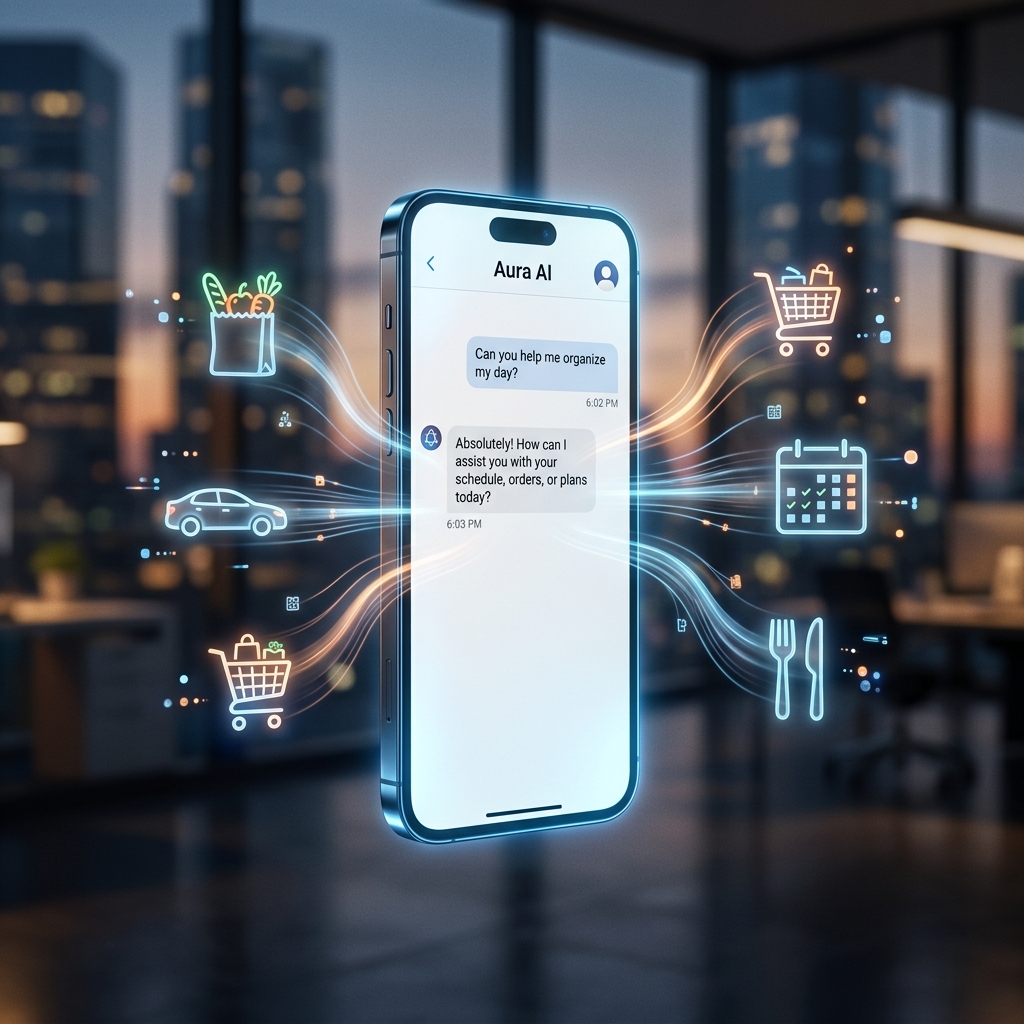
A massive shift is happening right now in how we use software, and most people haven’t even noticed it yet. We’re moving away from downloading a hundred different apps and toward a future of invisible applications powered by the AI chatbots we already use every day.
Imagine this: You don’t open your food delivery app, your ride-sharing app, your shopping app, and your travel app. You just open your favorite AI chatbot - whether it’s Gemini, ChatGPT, Claude, or another - and ask it to do things.
The key to this revolution is a standard called MCP (Model Context Protocol), which allows companies to connect their services directly to AI models. It sounds technical, but the implications are world-changing.
The Zomato Case Study: How MCP Makes Apps Disappear
Zomato is leading the charge by launching its own MCP Server. Instead of downloading their app, you can simply connect their server to your AI chatbot. You can find restaurants, apply coupons, and order food without ever leaving your chat window. It’s a “headless” experience that removes all the friction of traditional browsing.
The “Single Platform” Lifestyle
We already use AI for our daily work and social interaction. The new trend suggests that if one platform - your AI chatbot - can handle everything, there is no need to maintain dozens of separate apps. Whether it’s Uber, online shops, or travel bookings, everything is being consolidated into a single conversational hub.
Real-World Automation: From E-commerce to Parking
This logic applies to every sector, especially specialized services like parking software. Instead of navigating a complex website to find a spot, a user can just ask: “Find a spot for my car for these dates.” The AI communicates with the parking server, shows the details, and places the reservation instantly. The only thing left to handle is the payment integration - no more clicking through menus or downloading mobile apps.
The Death of App Fatigue
The “Invisible App” represents a future where software runs without human navigation. This solves the “app fatigue” problem where users are tired of managing too many accounts and interfaces. In this new era, you don’t go to the software; the software comes to you through your AI. Just ask, and it’s done.
Share this Insight
Think colleagues or friends would find this valuable?